

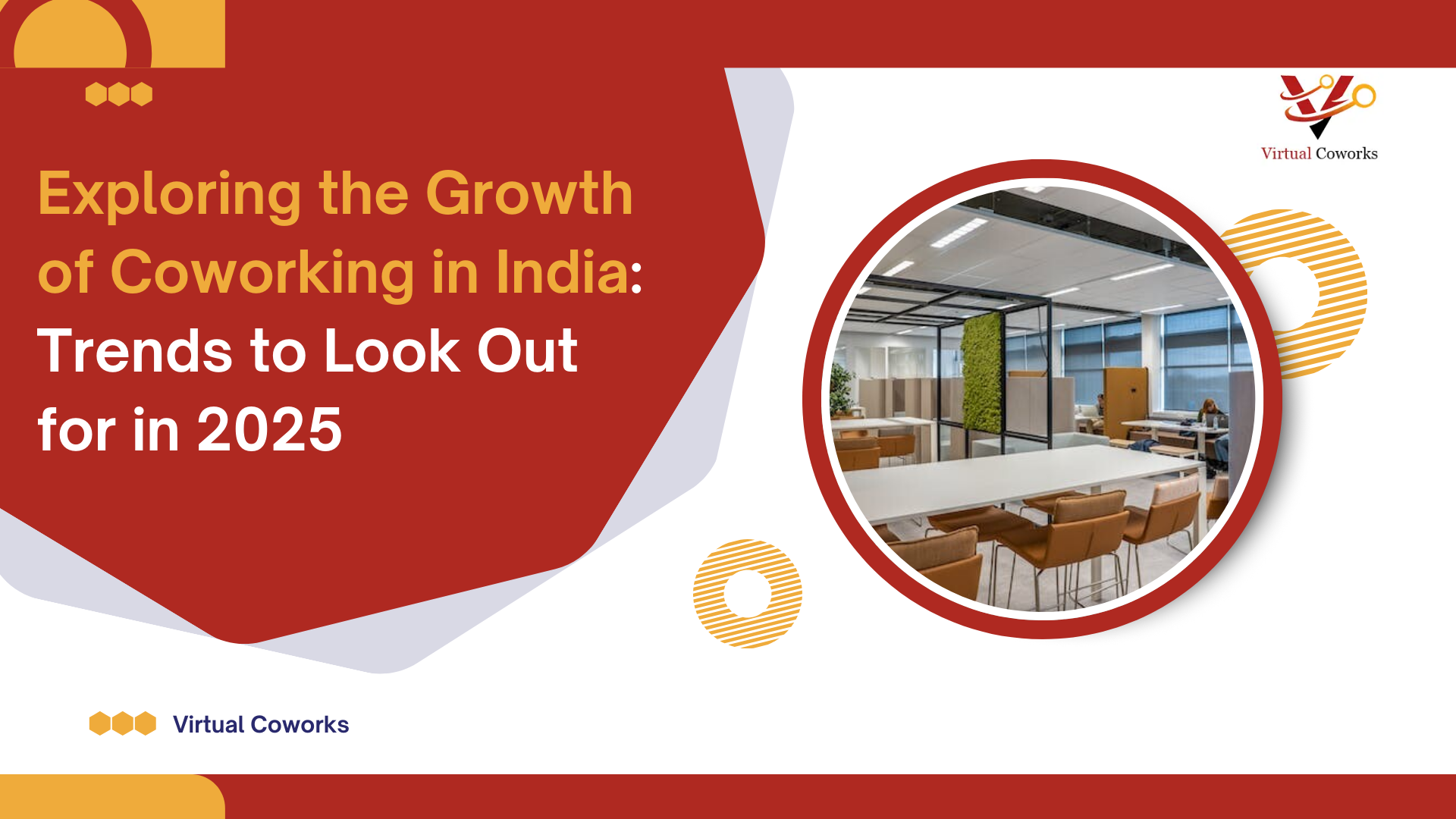
Exploring the Growth of Coworking in India: Trends to Look Out for in 2025
Over the past few years, India’s coworking sector has grown remarkably and is still expanding. People from a variety of industries, including digital startups, independent contractors, and big businesses, are adopting coworking spaces because of their adaptability, affordability, and community-focused settings. With new developments that will influence how we work and collaborate, the coworking scene in India is expected to change even more by 2025.
This blog will examine the major themes that are anticipated to characterise the coworking industry in India in 2025 and provide advice on how individuals and companies can capitalise on this expanding trend.
1. Continued Expansion in Tier 2 and Tier 3 Cities
The demand for coworking spaces is currently expanding throughout India, while they were first more popular in major cities like Bengaluru, Delhi, Mumbai, and Hyderabad. Coworking spaces are emerging in cities like Kochi, Jaipur, Ahmedabad, and Indore. The growing number of freelancers, remote workers, and startups in these areas, together with more reasonably priced real estate possibilities, are the main factors driving this expansion.
Without the high overhead expenditures of major cities, companies are finding it easier to establish themselves in Tier 2 and Tier 3 locations. Additionally, the job market in these cities is less competitive, which makes it easier for businesses to draw in talent.
Government programmes that encourage business and skill development are also contributing to the expansion of smaller cities. Young entrepreneurs are being encouraged to start firms by initiatives like Startup India and the Atal Innovation Mission, and coworking spaces are thought to be the best places for creativity and teamwork.
2. Focus on Hybrid Work Models
The move to hybrid work arrangements is one of the biggest developments in the contemporary workforce. Many businesses are choosing a combination of in-office and remote employment, while some are embracing completely remote work. In response to these hybrid work models, coworking spaces are stepping in and providing flexible office arrangements that let workers work from home or from a coworking location.
The need for coworking spaces with first-rate amenities and services is rising as more Indian businesses provide their workers the flexibility to pick when and where they work by 2025. These facilities must accommodate different types of work, such as private meeting rooms, team collaboration spaces, and individual workstations.
Furthermore, flexible membership options are anticipated to be offered by coworking spaces, enabling people to reserve desks or private offices as needed, for as little or as long as necessary. By 2025, this adaptability will be a hallmark of coworking spaces as companies look to cut expenses and maximise office space.
3. Rise of Niche Coworking Spaces
We anticipate the emergence of specialist coworking spaces catered to particular sectors or companies as the coworking market develops. The specific requirements of particular groups, like tech startups, creative professionals, healthcare organisations, and even legal and financial experts, will be met by these specialised coworking spaces.
A coworking space tailored to tech entrepreneurs, for instance, might have state-of-the-art tech infrastructure, a robust developer network, and access to venture capital funding options. Similar to this, coworking spaces devoted to the creative sectors may provide distinctive settings that support artistic expression, such recording studios, photography studios, or art galleries.
Coworking providers can meet certain company demands and promote deeper connections between like-minded people by providing these specialised facilities.As the need for specialised resources and a vibrant community increases, these niche places will gain popularity in India.
4. Increased Adoption of Technology
By 2025, technology will have a significant impact on how coworking spaces are shaped in India. Coworking spaces will need to incorporate cutting-edge technical tools in order to remain relevant as digital nomadism and hybrid work patterns become more popular. To improve coworking space management, expect to see more people using tools like cloud storage, high-speed internet, virtual collaboration platforms, and AI-driven solutions.
Coworking providers will use technology to automate member administration, streamline invoicing and payment processes, and schedule desks and meeting spaces. Additionally, as hybrid work becomes more prevalent, coworking memberships will need to include virtual offices and online networking events.
Furthermore, a lot of coworking spaces will employ artificial intelligence (AI) to examine data on client preferences and space usage. Members will benefit from more individualised and effective experiences as a result. Additionally, the use of augmented reality (AR) and virtual reality (VR) may increase, enabling remote workers to engage in more engaging and realistic virtual meetings or immerse themselves in virtual coworking spaces.
5. Sustainability and Eco-friendly Designs
Coworking spaces in India are starting to prioritise eco-friendly methods as sustainability gains international attention. Green building certifications such as LEED or GRIHA, which promote waste management, water conservation, energy-efficient design, and renewable energy use, are probably going to be adopted by coworking spaces in 2025.
Green coworking spaces will attract entrepreneurs and companies that value sustainability and the environment. Energy-efficient lighting, indoor plants, zero-waste practices, and the use of sustainable materials in interior design are some of the steps that coworking providers may put into place..
Growing consumer awareness of environmental issues and climate change is another factor driving the push for eco-friendly coworking spaces. Businesses will favour coworking spaces that share their principles of environmental responsibility as they search for methods to lessen their carbon footprint.
6. Community-driven Spaces
Although coworking spaces’ physical infrastructure is crucial, the community they create frequently provides the true value. Coworking spaces in India will prioritise creating vibrant, active communities even more in 2025. These venues will provide workshops, seminars, and networking events for a range of industries, facilitating communication and cooperation between people and companies.
By providing members with digital platforms where they can interact, exchange resources, and work together on projects, coworking providers will also leverage technology to improve the community experience. Businesses will find this sense of community and connection to be quite appealing, particularly as remote labour becomes more common.
Coworking locations that prioritise employee well-being, work-life balance, and wellness should proliferate. Coworking providers will incorporate wellness amenities that promote their members’ physical and mental well-being, such as fitness centres, meditation rooms, and on-site cafes serving nutritious meals.
7. Flexible Pricing and Membership Models
The need for flexible pricing structures will grow as companies become more aware of their overhead expenses. More flexible and dynamic membership options will be available at coworking spaces, enabling both individuals and companies to select a cost structure that best meets their requirements. Pay-per-use schemes, monthly subscriptions, and long-term lease alternatives are a few examples of this flexibility.
For instance, one company might require a dedicated office for a whole staff, while another might simply require a coworking space for a few hours each week. Coworking spaces can serve a variety of requirements and budgets by providing various membership plans.
Additionally, coworking providers may implement tiered pricing structures, allowing members to access varying degrees of facilities and services according to their company needs and budget.
8. Corporate Adoption of Coworking Spaces
More big businesses in India will start using coworking spaces in 2025 to give their staff members more flexibility. Many organisations have already redesigned their office spaces as a result of the shift to remote and hybrid work practices. Many multinational organisations are using coworking providers to give their staff a flexible and collaborative workspace instead of retaining costly, traditional office facilities.
Coworking spaces will also be used by corporates for client meetings, satellite offices, and project-based work. This trend will be especially prevalent in urban areas where businesses still wish to provide office space to their staff despite having fewer employees.
Conclusion
In 2025, the coworking space market in India is expected to rise significantly as new trends emerge that will change how we operate. Coworking is positioned to become an even more essential component of India’s corporate ecosystem as a result of its growth into smaller cities, the emergence of specialised coworking spaces, the growing use of technology, and the emphasis on sustainability. Coworking spaces will provide a flexible, affordable, and community-driven setting that fosters cooperation, creativity, and expansion for business owners, independent contractors, and corporations.
Businesses need to keep up with these developments as 2025 approaches in order to fully benefit from coworking spaces, whether that means adopting hybrid work patterns, strengthening communities, or developing tech-driven, sustainable workplaces. Coworking in India has a promising future, and now is a great moment for companies and individuals who want to follow this expanding trend.